 Hardware Retailing The Industry's Source for Insights and Information


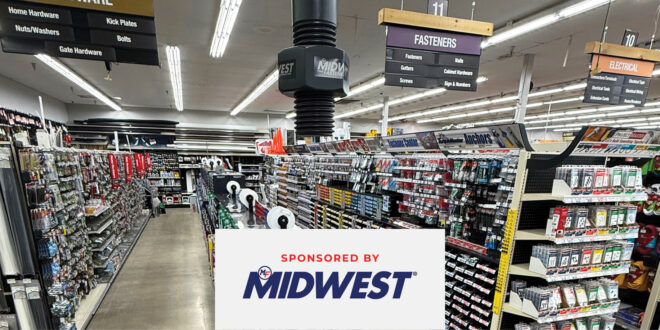
The fastener category is a core category for many operations serving both DIYers and professionals that can be a strong revenue driver when curated and utilized accurately. The sheer size and detail of a fastener assortment can become overwhelming quickly for retailers who are balancing selling other product areas in their store. Using an expert partner to understand the nuances of a fastener category is a good way to stay organized and optimize efficiency.
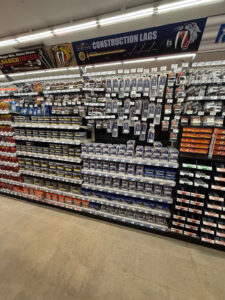 At Gus Bock’s Ace Hardware, with four locations in northwestern Indiana, fasteners bring in a steady stream of sales, acting as a major revenue driver for the operation. The operation’s fastener vendor has been a reliable partner to the store for just over a year, providing service and guidance on how to best sell this lucrative category.
“Our fastener display is the quiet giant in our store,” says Rob Grill, Gus Bock’s Ace co-owner. “Our assortment gives us credibility with a wide range of customers, ranging from automotive repair and property management to carpenters and plumbers. They come in for the fasteners and pick up other items ranging from drill bits to work gloves.”
While the fastener display is impressive at Gus Bock’s Ace, it can be overwhelming for customers who are searching for a specific item. The combination of employee expertise and the vendor’s planograms with helpful organization and identification tools has allowed Grill and his employees to easily guide customers to their project needs. Employees receive hands-on training to be able to serve customers in this category, with new associates working side-by-side with a more seasoned employee to acclimate them to all the aspects of the department.
“Our job is to break through our customers’ confusion and get them what they need,” Grill says. “One thing that has been helpful is having access to ordering through our vendor’s website. It is easy to navigate and allows us to view box quantities, costs and availability of certain fasteners that we might not carry in our stores.”
The fastener department at Gus Bock’s Ace includes color-coded sections, providing clear visuals for both employees selling fasteners and customers who come in searching for a specific item. Grill and his team walk through the fastener aisle a few times a day to keep it looking clean and organized.
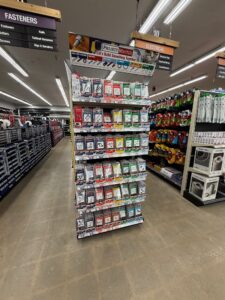 “All the metric bulk bins are red and stainless steel is blue,” Grill says. “The rest are black, but those simple touches help our associates and our guests narrow the search.”
The operation’s vendor ships product to Gus Bock’s Ace in a layout that closely resembles the footprint of the store assortment, setting the store up for success even before the fasteners hit shelves. For example, items that sit next to each other in the store are packed right next to each other in the shipment Grill receives. All the shipping labels clearly indicate what each product is, eliminating the time it takes for employees to restock the product.
“When a fastener order arrives, the guys enjoy putting the order away,” Grill says. “The labor saved while putting away orders is worthwhile..”
Maintaining inventory is a common problem for fastener categories across the board, especially when demand for these products are high. Grill’s vendor provides Gus Bock’s Ace with downloadable files to organize inventory and keep in-stock amounts up to date. These files reflect the specific prices of the fasteners so the store can receive orders and keep the quantity on hand accurate.
“This also allows our cashiers to scan bulk boxes and have the prices ring up immediately instead of having our cashier call for a price check every time a guest brings up a box of screws,” Grill says. “They separate the files so assortments that we use a ‘dump sku’ for are received as a dollar amount and the bulk items that we sell by the box are received with proper quantity and cost.”
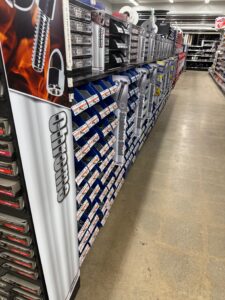 For the fastener category at Gus Bock’s Ace, the bulk bins yield the strongest margin opportunities when customers are purchasing fasteners in smaller quantities.
“We worked to tweak our pricing in various categories by going to a .99 price point on boxed items,” Grill says. “In some cases, depending on the category, we either raise or lower retails based upon the sensitivity of the category.”
Grill resets his fastener category every year, offering the most up-to-date products to customers. His vendor sends multiple representatives to assist with the reset.
“They were able to reset our locations in a very timely manner, making the transition painless and efficient,” Grill says. “It was nice to see all the employees for their company coming together as a team, instead of one person having the burden to do everything themselves.”
Category Reset Tips
While the reset of the fasteners category at McGuckin’s was a success, the process didn’t come without challenges. From shelving delays to customer retraining, the team encountered hurdles that required flexibility and quick problem-solving. McGuckin Hardware’s fasteners manager Michael Gillette offers his best practices for category reset success.
Focus on One Project at a Time
During the problem identification stage of a category reset, you may find other categories that could also benefit from a reset. It’s important to focus on one project at a time and not attempt to tackle multiple resets simultaneously.
“At one point, we had three category resets happening concurrently and that caused some challenges with so many moving parts, people and personalities,” Gillette says. “If you’re going to do a reset, start one and finish it before the next.”
Choose the Right Partner
Having a supportive vendor is crucial. If you’re not confident in your vendor’s ability to assist you, it’s worth looking for other
partners who will.
“Finding the right partner is essential,” Gillette says. “I can’t emphasize how important it is to have a strong relationship with your vendor.”
Plan for the Long Term
A reset isn’t complete once the new layout is in place. After the category reset is finished, it takes months to fine-tune inventory and placement to maximize margins and processes.
Train Employees and Customers
Retraining your employees and customers is essential. Employees need to understand the new layout and where products are to best help questioning customers.
“If you’re doing a category reset, you’re going to have customers come up to you and say, ‘You used to have this product 20 years ago and you don’t have it anymore,’ when in reality, it’s just in a different spot,” Gillette says. “Pay attention to your customers’ feedback.”