 Hardware Retailing The Industry's Source for Insights and Information


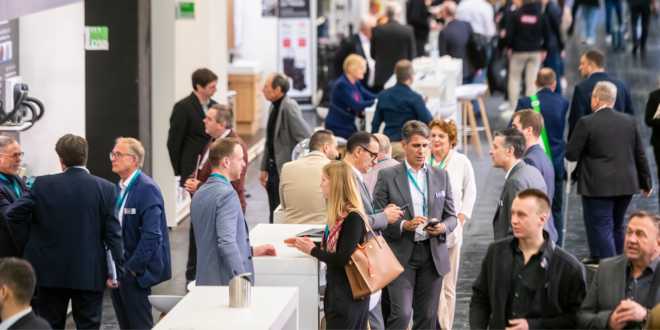
Many retailers are still knee deep in ice melt, snow shovels and ice scrapers, but this month kicks off the spring market season with hot deals, educational sessions and networking opportunities. Each buying market is unique, as is the process for prepping for the event. As you make plans to attend your wholesaler’s market, hear from fellow retailers who share their market prep best practices.
Going Big on Relationship Building
As soon as the fall market concludes, Alex Porter, chief operating officer for Porters Ace Hardware Building Centers, and his team start planning for the spring market. Three generations of Porter family operate six locations in Missouri.
“We save the dates, book hotels, begin monitoring airfare and take care of any other logistical work needed,” Porter says. “Our director of marketing, director of operations and store managers are all part of the planning process and attend the markets as well.”
If the market is within driving distance of the stores, Porter says he will also bring department heads and other employees who have potential for future leadership.
 “Bringing them along to markets offers them a chance to travel, educates them on our decision-making processes and leads to buy-in for new products and programs we may commit to while at the market,” Porter says. “This reduces some of the friction between executive decisions and operational level execution.”
Before the market, Porter and his team develop a master schedule, which includes all meeting times and locations and where each of the team members will be during the day.
The team also identifies key training opportunities, vendors who need to be corresponded with and new product sets they are considering adding and want to see in person.
For the Porters, a majority of buying decisions happen before the shows through online buying.
“Pre-buying allows our staff the time to dive deeper into new opportunities rather than spending all their time just placing orders,” Porter says. “Then we make decisions on things we want to see while we are there, and a select few decisions we take home so we can study our space and develop further plans before we commit to the purchase or program.”
During the market, Porter and his team manage vendor relationships through store managers, making appointments to visit vendors based on the needs of their store’s location and the leadership team discusses companywide opportunities with new vendors. For this upcoming spring market, Porters is focusing on the lawn and garden department with a specific focus on live goods and business-to-business opportunities.
“Although most of that planning has already occurred, the early spring market is an opportunity to finalize our timing and ramp up for the season by connecting with relevant vendors and co-op support staff,” Porter says.
Buying and building vendor relationships is just one part of the market experience for Porters. The team also takes advantage of every relevant training opportunity it can while at the show.
“The markets are a great chance to get in-person training with subject matter experts physically present for questions,” Porter says. “Often, the training also presents opportunities that we can get a jump start on with the availability of certain resources at the shows.”
Improving Margin From the Market Floor
At Koopman Lumber, planning for large dealer markets starts four months ahead of the event, says director of retail sales Coreen Nolle and vice president of branch operations and retail sales Matt Nichols. In this timeframe, the team decides who will be attending, outlines any large goals to accomplish at the show, such as choosing a new vendor or assortment for a reset, and books travel.
When it comes to deciding who attends the markets, Koopman Lumber leadership employs two schools of thought, alternating between taking a small, curated team and inviting a large number of employees to attend, Nolle says.
“The years we bring a smaller team, it’s usually just our purchasing and merchandising leaders,” Nolle says. “The benefits of a smaller team include simpler travel logistics and straightforward decision-making on new products and assortments.”
A larger team allows for more coverage on the show floor, offers the ability to meet with more vendors and provides additional perspectives and experiences to weigh in on assortment decisions. Traveling with a larger group can also be a great teambuilding experience and exposes more employees to the industry, Nolle says. On the negative side, a large group means more complicated travel logistics.
“Managing airport commutes and multiple dining preferences can be tough, so it’s important to be organized. Make sure everyone has flight and hotel info, shuttle schedules and meeting and meal times before leaving so everyone knows where to be and how to get there,” Nolle says. “And regardless of how many people you take, assign everyone tasks while they are at the show, otherwise it becomes easy for teams to be unproductive.”
About 1-2 months out from the show, Nolle, Nichols and the Koopman team schedule meetings with vendors they want to meet with at the market.
“Shows can be chaotic, so setting up meeting times or dinners with vendors is the best way to ensure one-on-one conversations can happen,” Nolle says.
A few months out, the team tours each of Koopman Lumber’s 11 stores and develops a list of wants and needs in each store and any large projects or resets planned. Using these lists, Nolle assigns tasks—from visiting specific vendors to looking at certain product categories—to each employee attending the market. Booth numbers are also included in this itinerary to speed up time on the market floor.
During this time, Nolle also evaluates the educational sessions that will take place at the market and assigns one or two people to attend pertinent sessions. After the market, these employees present their notes and takeaways to the group.
Koopman Lumber purchases from both Orgill and Emery Jensen and employees attend both shows each year. Prior to its in-person dealer market in early spring each year, Orgill provides each dealer a report of everything ever purchased on promo. Using that list, the Koopman Lumber team performs a replenishment analysis, putting together a forecast of three months’ worth of purchases on anything at the upcoming market that will offer 5% or more in savings.
“We do this for all locations, so by the time we actually fly to the show, our replenishment purchasing at all the promo prices has all been taken care of,” Nolle says. “When we’re at the show, we can then focus on vendor relations, looking at new products and assortments and show reset deals. It saves a lot of time and effort while we’re at the show and maximizes our trip.”
Along with repurchasing items, Nichols says they utilize the markets to find new products.
“Every market features new vendors who are coming into that wholesaler’s warehouse,” Nichols says. “The markets are probably the best opportunity to understand those new products and new vendors because otherwise you’re just looking at a list.”
During the final 1-2 weeks before the show, Nolle distributes the detailed itinerary to the internal team and finalizes and confirms vendor meetings, dinner reservations and other pre-planned activities.
While at the show, Nolle says the team fulfills its assigned duties during the day and then meets up for lunch each day to share information and takeaways gleaned that day.
“We always come together at lunch and go around the table sharing anything that we found new and exciting, products we think will improve margin, upcoming trends and anything we learned on the market floor. It’s like our own roundtable,” Nolle says. “A successful market comes down to prep work. The more prep you can do, the more productive you’ll be at the show and the better results you’ll have.”
Finding Ways to Refresh
A big believer in the benefits of attending wholesaler markets, Franklin Cloninger, general manager at Triangle True Value Hardware in Greenwood, South Carolina, starts his market prep a few months ahead of the event.
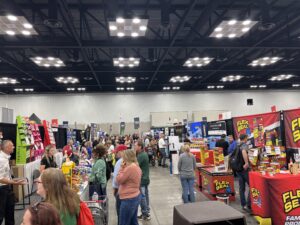 Cloninger conducts a walkthrough of each of his operation’s three locations with that store’s manager, looking for areas of the store that need improvement or departments that could use a refresh. During the walkthroughs, Cloninger takes photos and videos in the stores to reference later at the market and better communicate with vendors the store’s needs in that particular department or area.
“Getting to have product conversations with vendors at the market is much more beneficial to us than having those conversations over the phone,” Cloninger says. “Communication and information flow is much better face-to-face.”
After the walkthroughs, Cloninger and his team conduct data analysis, running reports through their POS software or through True Value and Do it Best to see if the data lines up with what they are seeing in the stores. Finally, Cloninger turns to industry resources, like Hardware Retailing magazine, for new and upcoming products and checks if those vendors will be at the market to get to see and feel the product.
The location of the market determines who from the operation attends. For drivable locations from South Carolina, Cloninger will bring along a manager from each of the three stores, sometimes including the assistant manager so they can experience a market and lend their input to the buying process. For markets farther away, Cloninger typically attends alone.
Even with the ability to take care of much of the market buying online before the actual show, Cloninger says he does a majority of the buying in-person on the market floor. Cloninger and his team will stay for the duration of the market, using Day 1 as a preview. On Day 2, they search out specific deals and vendors and then complete most purchases on Day 3.
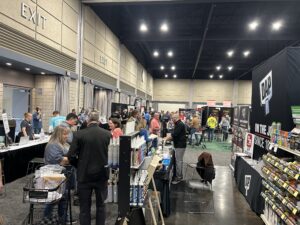 “This method works for us for two reasons. First, sometimes you get better deals when you’re purchasing off the floor,” he says. “Second, we’re better able to compare deals from different vendors. If I have two vendors of the same product, I think it’s hard for us to compare them online, whereas when it’s in person, I have the sell sheet for the one and sell sheet for the other, and I can see which one will be the better for us in the long term.”
Exceptions to this process are commodity products.
“For example, we buy ice melt one time a year at the show,” Cloninger says. “We know we’re going to buy it by the pallet, so we don’t wait to purchase at the market and buy ahead of time online to be sure we don’t get in a rush and forget about it.”
To manage vendor relationships at the markets, Cloninger says he identifies key vendors for each store, creates a list of must-see vendors and assigns those vendors to each of the managers attending to assure the team is seeing all the key vendors.
“Our market experience goes beyond vendor meetings and buying,” Cloninger says. “We also find a lot of value in the educational sessions and plan on having certain employees attend specific sessions that fit in with their areas of expertise, whether that’s marketing, LBM or other areas.”
Maximize Your Market
Cloninger shares three best practices for getting the most out of your market experience.
- Wear comfortable shoes and drink lots of water. “It’s easy to feel bad by the third day because you’re dehydrated and exhausted.”
- Carry plenty of business cards. “Also, it’s helpful to have a process in place before you go to track business cards that you receive. A lot of people are moving to virtual cards, but I still see a lot of value in paper cards that I can write notes on. Vendors meet so many people that they might not remember my exact issue, but when they go back through and see my business card with a note on it, they know exactly why I’m calling and it makes the process a lot better.”
Take advantage of the shipping booth. “There have been so many times I haven’t been able to bring home brochures or product samples because I didn’t have space in my carry-on. When you spread out the shipping over all the different items, it really pays off to be able to bring those back with you.”