 Hardware Retailing The Industry's Source for Insights and Information


A home improvement operation’s core pillars, like plumbing, electrical and paint, are often the main drivers of customer traffic and product sales. When handled correctly, niche categories can also pull their weight in
attracting additional customers and creating impulse purchases. Discover how these retailers capitalize on these categories in their operations and glean insights from their best practices to identify which niches to incorporate in your own store.
Retail Reloaded
Stand Out With a Gun Niche
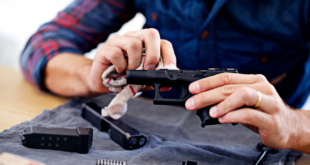
At A.F. Boyer in Slatington, Pennsylvania, the local joke is that when a husband says he’s going to the hardware store, he might come home with a gun—and maybe a bag of screws. Firearms are the heart of the business, making up about 80% of sales. Owner Abel Boyer says the category started small but has become a major revenue driver.
“We’ve always sold hardware, but the gun side has grown steadily over the years,” he says. The Boyer family has 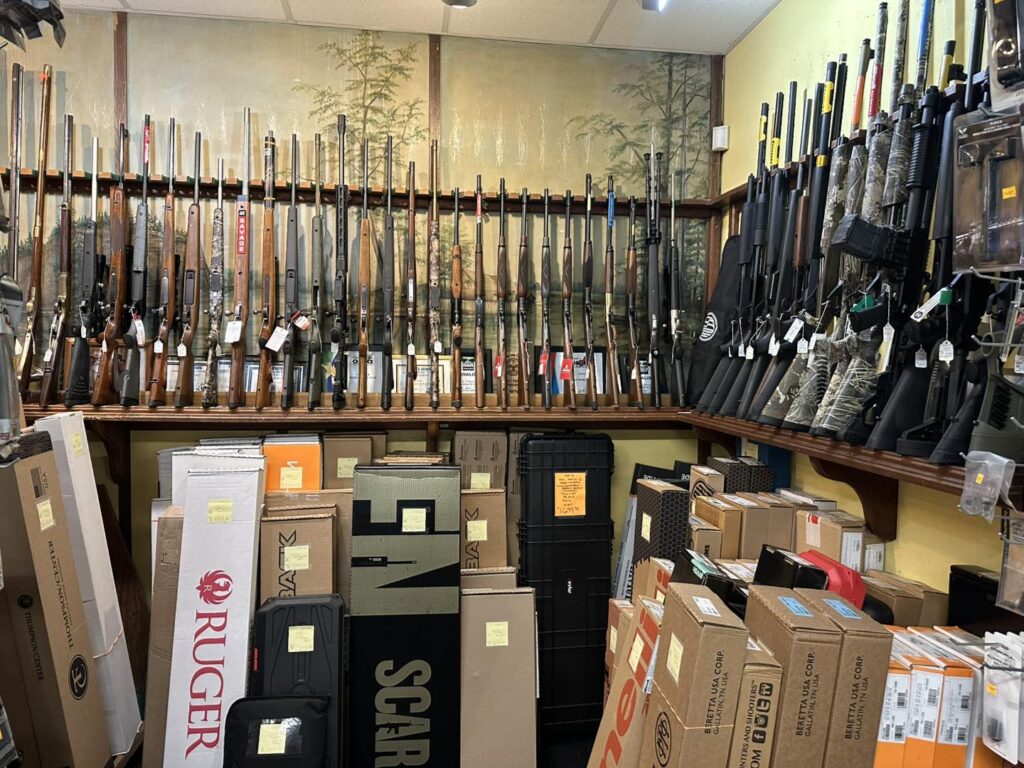 owned the business since 1868, when it served the local slate quarries. Firearms became part of the mix in the 1970s, when Boyer’s father expanded the store’s focus. Today, A.F. Boyer is one of the largest federally licensed firearm dealers in Pennsylvania. Boyer has built on that legacy by keeping his inventory fresh and customer-focused.
The store stocks a wide range of firearms, ammunition, holsters and accessories, adding new products frequently.
“There’s always something new coming out,” he says. “We make sure we’re stocking what people want.” Community involvement is also a big part of the store’s success. Boyer partners with local groups and national organizations such as Ducks Unlimited, the National Wild Turkey Federation and the Rocky Mountain Elk Foundation to support conservation and fundraising efforts.
“A big focus of mine is raising money for nonprofit organizations,” Boyer says. “I strongly believe in conservation, so I help multiple local and national nonprofit organizations.”
One of his biggest events each year is the Glock Day sale, where the store teams up with the manufacturer for a one-day event that blends community outreach with business growth.
“Last year, we sold around 150 Glocks in eight hours,” he says. “It was quite a feat. The event is all-hands-on-deck, but we get a lot of foot traffic and people have fun.” Boyer says success in any niche takes commitment, teamwork and long hours.
“Every generation of our family has worked in the store,” he says. “Having someone on your side who believes in the business as much as you do makes all the difference. To be successful, focus on what you know, serve your customers well and stay involved in your community.”
Neighborhood Love
Curate a Locally Sourced Product Section
Showcasing your community and supporting fellow independent businesses in your area through curating a
local product section is a great way to differentiate your store and provide unique offerings to your customers.
At Ambridge Do it Best Home Center in Ambridge, Pennsylvania, owner David Strano believes in the importance of celebrating local creations through selling many locally made products in his store.
“Locally owned products are key to any family owned business,” Strano says. “Our customers love seeing we are
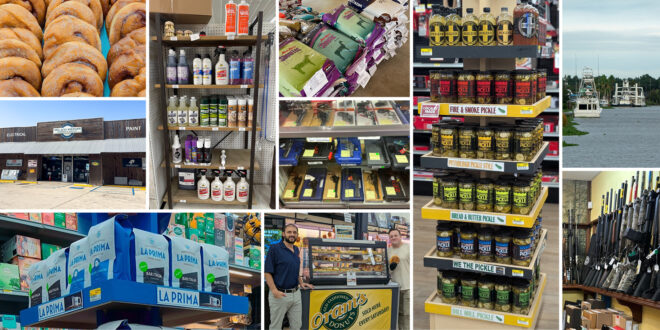
trying to build the community by carrying local products.” Ambridge’s local products span from pasta sauce,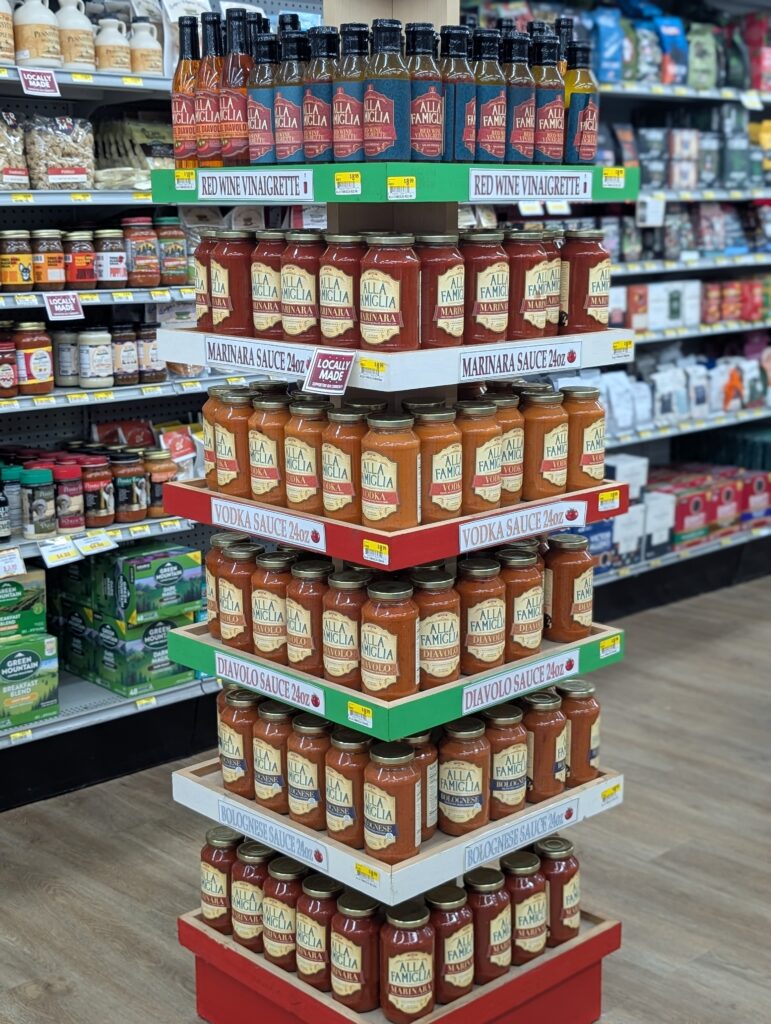 barbecue sauce and coffee to dog treats, granola, pickles and more. Strano hand selects the local products that make their way into his store, often choosing items while he’s out shopping at other stores.
“If it is something that I like, I will end up reaching out to the company to bring it into my store,” he says.
Properly showcasing local products and giving them their time in the spotlight is essential to move these
products off the shelves and also provides opportunities to highlight a community’s local charm. At Ambridge
Do it Best, Strano exhibits his local products, specifically food products, by offering sampling events.
“We frequently will do samplings on the weekends for our pasta sauces, pickles and coffee, and occasionally other categories as well,” he says.
For five years, the store has also partnered with Oram’s Donuts, a local donut establishment, to sell
freshly-baked donuts every Saturday morning to customers, offering both walk-ins and pre-orders.
“Every Saturday, Oram’s delivers the donuts before we open the store,” Strano says. “We sell approximately 400 donuts starting on Saturday morning until they are sold out, which is usually around 10 a.m., give or take. We started selling them 5 years ago and it has been a success since Day 1.”
For Strano, shopping local is the key to stocking local.
“Going to local farmers markets to see what is popular in your own town and surrounding areas and going to
local restaurants that sell their own products are great ways to source locally. Having a vision and keeping
your eye out for these products has been the key to our success,” he says. “I tend to make a list of products that I
see and want to bring into the store and chip away with bringing them in one at a time.”
Swim, Don’t Sink
Make the Marine Category a Community Staple
Louisiana is known for being a sportsman’s paradise, and at Melaco Sisters Hardware & Supplies in Cut Off,
Louisiana, the marine department reflects the local lifestyle more than a retail trend. The store’s assortment
caters to trawlers, charter captains and recreational fishermen, who live and work along Bayou Lafourche.
“The reason we have so many niche trawling and fishing products in our store is because our community
is a very big shrimping community,” says Lauren Melancon Guidry, co-owner of Melaco Sisters Hardware
& Supplies. “Bayou Lafourche goes all the way down to the gulf, and it serves a lot of offshore oil and gas. Those
two industries, shrimping and oil, drive what we stock.”
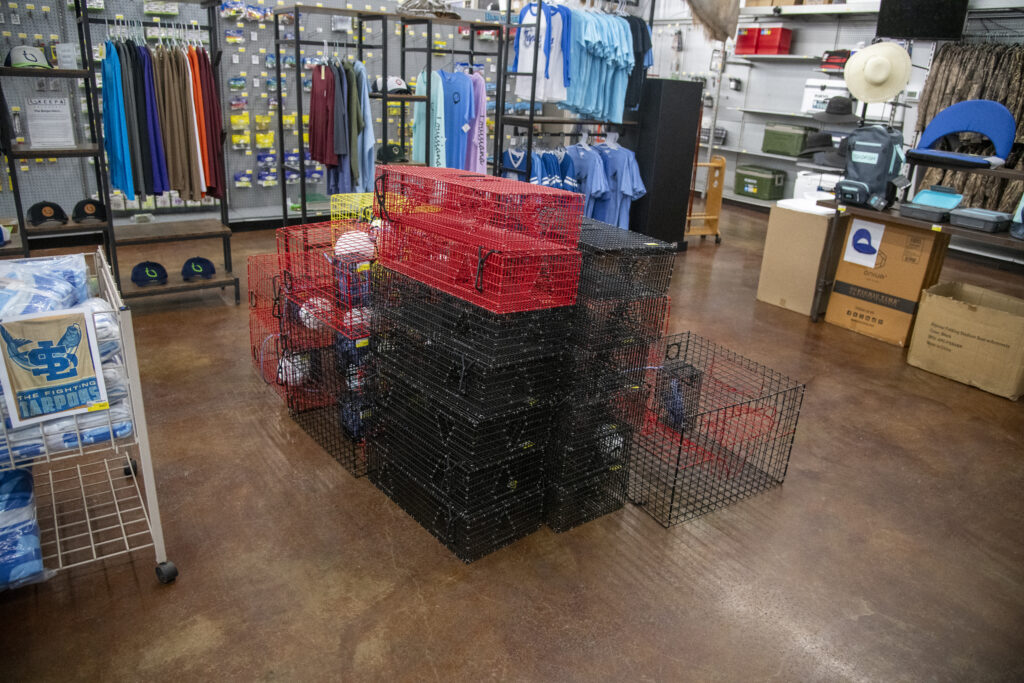 The store carries gear designed for the area’s commercial trawlers, including net rope, thread and
needles commonly used to repair nets by hand. In addition to stocking products for commercial boats, the
marine category serves the region’s strong recreational fishing market.
“Everybody living down here has their own boat,” she says. “Knowing that, we always make sure to have our
marine category fully stocked.”
When Guidry and her sister Vanessa Melancon took over the store, they knew they needed to
expand the marine category as customers repeatedly came in asking for certain products. Now, many products come directly from the community, from crab traps made by a local fisherman to offshore
fishing lures crafted by a local. The store even began working with the Louisiana Department of Wildlife and Fisheries to sell fishing licenses.
Guidry says getting set up with the state was easy and the relationship has been great, but not a moneymaker for the business.
“I think we only make a dollar off each license, but it brings people in, and it allows us to sell them everything else they’ll need before they get out on their boat,” she says.
Located next to a public boat launch, the store sells live bait, ice, worms, beer and other essentials for a day on the bayou.
“When people get off work and want to fish, they can swing by, grab what they need and head straight to the boat launch behind us,” Guidry says. “Everything we do in that department comes back to how people live here—we live on the water.”
Farming Focus
Meeting Customer Needs With Agriculture
The farm and ranch category is an essential component of any rural operation, serving a popular industry and way of life for many customers. At Eagle Hardware Farm & Ranch in Royse City, Texas, farming products are the backbone of the store’s sales. While the store serves a wide customer base, many young and aspiring farmers are regular shoppers, including members of FFA and 4-H groups in the Royse City area.
“We have a ton of high school kids and their families coming to our hardware store to get their feed and supplies related to their ag projects,” says Bethany Guevara, manager at Eagle Hardware Farm & Ranch. “These customers will often see other products we carry, like chicken food or plumbing products, and make a note to consolidate future trips.”
The farming and feed section at Eagle Hardware is organized in one area of the store, providing a simple shopping experience for customers. A 4-foot shelf stocked with show shampoos, conditioners, sprays and other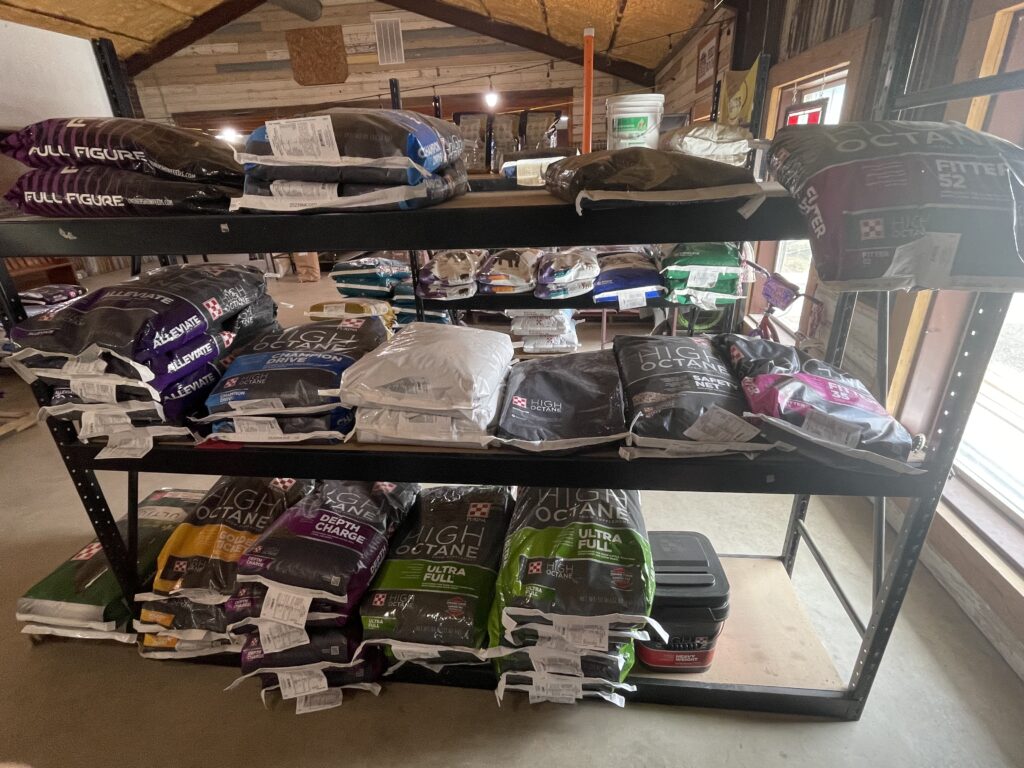 miscellaneous show-related items is also displayed at the front of the store, introducing these products to customers when they enter the front doors and directing them back to the farm section.
“We keep all of the animal-specific feed and show supplements together where the families can find them easily,” Guevara says.
Demonstrations are a popular way to market and showcase specific farming products in your store, showing real-life examples of how these products can be used. Eagle Hardware offers many free events each month for the Royse City community, including pond workshops, chick workshops, succulent planting workshops, tea parties,
Valentines family dances, Christmas events and vendor fairs with food trucks, establishing the store
as a welcoming community hub.
Eagle Hardware also recently added a show clinic to its list of events, catering to the influx of customers shopping to prepare for the agricultural show season.
“At the show clinic, attendees had the opportunity to spend time with the community, ask questions and hear from a livestock judge and mentor,” Guevara says. “We also had a lot of show supplies goodies to give away as door prizes.”