 Hardware Retailing The Industry's Source for Insights and Information



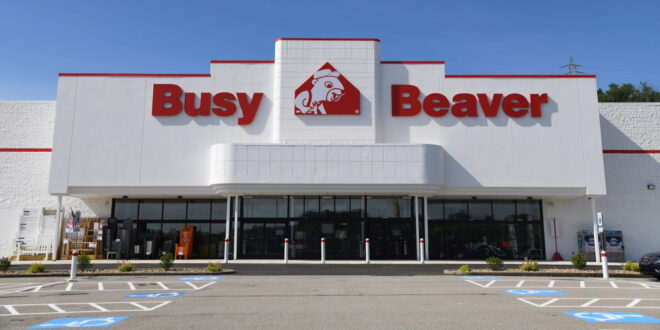
Becoming more than just an operational service, delivery provides another way for independent retailers to compete on convenience, customer experience and localized service. Busy Beaver Home Centers, which has 19 stores in Pennsylvania, West Virginia and Ohio, is approaching last-mile delivery across multiple stores by leaning into a third-party provider, Nash, to make its delivery model more scalable and avoid managing everything manually or store by store.
“We found that trying to broker relationships with larger third-party providers like Roadie or DoorDash can quickly become complex,” says Adam Gunnett, director of IT and business intelligence. “That is where a platform like Nash can help bridge the gap by giving independent retailers a more practical and scalable way to offer delivery without having to build the entire infrastructure themselves.”
Customers increasingly expect delivery to be part of the shopping experience, including from their local home improvement retailer, Gunnett says, and want to find what they need online, understand the delivery cost and timing and receive updates along the way.
“For our customers, that convenience often solves a practical problem,” he says. “They may be in the middle of a project, unable to leave a jobsite or purchasing something that will not fit in their vehicle. Delivery helps them keep moving, and some are willing to pay a little more to save the trip.”
Busy Beaver has the products, local knowledge and personal service customers value, but Gunnett says they were looking to give customers another reason to choose the operation. He understood that delivery improves the customer experience and helps the business compete more effectively with larger retailers, but Gunnett wanted a delivery option that worked for the stores, the store’s geography and the products they sell. That’s when Gunnett discovered Nash, which Busy Beaver has been utilizing since January 2026.
Not only has delivery improved service with current customers, it has also attracted new customers looking for convenience.
“For existing customers, delivery provides another way to shop with us when they cannot get to a store or transport a purchase themselves,” Gunnett says. “It also gives us an opportunity to earn business from people who choose where to shop based on convenience and may not have considered Busy Beaver before.”
In the first nine months of the program, 15 customers placed repeat orders, with the most frequent customer placing nine orders. Gunnett finds that repeat use encouraging.
“We want delivery to become a dependable option customers remember the next time they need something,” he says.
Managing Multiple Places
For businesses with multiple locations like Busy Beaver, there is a challenge in creating a consistent customer experience when conditions vary by store. Driver availability, delivery distances and order preparation times all affect what they can offer.
The product mix Busy Beaver sells also adds another layer of complexity: A small item, a patio furniture set and an oversized load may require different vehicles and handling. The operation’s broader delivery model included local delivery partners, large-item carriers and the Busy Beaver-owned trucks, making matching each order with the right option essential.
Because the 19 stores are spread across a broad geographic area, offering same-day delivery at every location using only their own resources would have been impractical, and having each store manage separate delivery-provider relationships would create a lot of coordination.
“We needed a process that was consistent enough for our stores to follow and flexible enough to accommodate those differences,” Gunnett says. “Nash gives us access to multiple delivery providers through one platform, helping us expand our options based on the store, the product and local availability. That allows us to offer delivery where it is feasible without building the entire infrastructure ourselves.
In the first nine months of the program, Busy Beaver has served 19 pickup locations and 174 unique drop-off locations, giving Gunnett a concrete picture of how delivery is extending service beyond the store.
Gunnett appreciates that Nash provides one place to evaluate delivery options, arrange service and monitor progress across multiple providers, which is crucial because each provider has different coverage, capabilities and availability.
“Managing those relationships individually would mean working through separate systems and processes, with more coordination as we added locations or providers,” Gunnett says. “A common platform makes that work more manageable and gives us a practical foundation for growing the program. Our stores still have an important role in preparing orders and supporting customers. Nash helps simplify the delivery coordination around that work.”
In the months since implementing Nash, one of the biggest lessons that Gunnett has learned is that a successful delivery starts inside the store. Accurate product information, an order that is ready when the driver arrives and a clear handoff all make a difference.
“The first nine months also illustrated how varied delivery needs can be,” Gunnett says. “Driving distances ranged from 0.19 miles to 104.2 miles, and products included a four-piece Cayman stacking furniture set with cushions and an 8-foot aluminum stepladder. Those examples show why dimensions, vehicle requirements and provider coverage matter.”
Another lesson he learned is the importance of communication and follow-through.
“When a delivery does not go as planned, the customer still sees it as a Busy Beaver experience,” he says. “We need a clear process for helping them and resolving the issue.”
For other independent home improvement retailers considering offering local delivery, Gunnett recommends starting with a manageable scope and learning from actual orders. Retailers need to have a grasp on which products they can deliver reliably, where coverage is available and a realistic look at the full cost, including store labor and the time spent handling delivery issues.
“A partner can help simplify coordination, but clear store procedures are essential,” he says. “Your team needs to know how to prepare an order, hand it off and respond when something needs attention.”
He also suggests considering the purchase that delivery makes possible.
“A customer may need your products but have no practical way to get them home, and serving that customer is an opportunity to earn both the immediate sale and their future business,” Gunnett says. “Build a service you can deliver consistently, understand the economics and expand from there.”
From this foundation with Nash, Gunnett sees an opportunity to serve existing customers in new ways and reach shoppers who may never have considered Busy Beaver. He is finding that customers place a high value on convenience and are willing to pay for it, and being easy to find online, easy to shop and offering delivery gives Busy Beaver a chance to earn their business.
“Our focus is on making online shopping and delivery easier and more reliable, then expanding where it makes operational and financial sense,” Gunnett says. “We want customers to experience the helpful service and local knowledge Busy Beaver is known for throughout the purchase, whether they visit a store or order from home.”