 Hardware Retailing The Industry's Source for Insights and Information




The adhesives category continues to evolve as new technologies are introduced and consumers seek more durable, sustainable and functional products. The category is also becoming more specialized, requiring expert knowledge to sell effectively. According to a new study conducted by MarketsandMarkets, the Structural Adhesives Market size was $14.75 billion in 2026 and is projected to reach $19.83 billion by 2031. Manufacturers are focusing on lightweight, high-performance technologies, replacing labor-intensive welding and mechanical fastening with structural adhesives, according to the study.
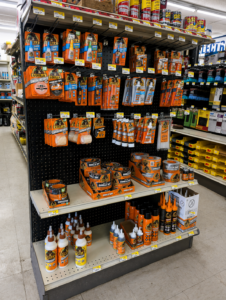 As new products emerge in this category, positioning these products in your store strategically through cross-merchandising, elevated endcaps and a team trained on the most up-to-date items will move your adhesive category off the shelves.
Fuller & Son Hardware has been operating in the Little Rock, Arkansas, area for over 100 years. The store’s collection of adhesives span from everyday products like superglue and tape to commercial-grade construction adhesives to adhesive spreaders and removers. Serving both DIYers and contractors, owner Jeff Fuller and his team of managers and employees spread across his six stores have learned how to expertly sell this category, using smart product placement and a mentorship training approach.
Catching Customer Demand
For many product categories, DIY and professional customers have different needs when it comes to the durability, cost and functionality of an item. At Fuller & Son Hardware, however, DIYers and pros tend to shop the adhesive category the same.
“Demand is usually the same for this category across all customer types,” Fuller says. “A lot of the pros know about top construction adhesive brands and the large caulking tubes. Many brands have done such a good job marketing that they appeal to the DIY market, but those are solid products in general, so they get used by the pros as well.”
Fuller sources his adhesive products primarily through the store’s supplier, Orgill, and says the store typically has the adhesive products customers are looking for in stock. If something is not on the shelves, the team is equipped to recommend an alternative product, a key aspect of employee training at Fuller & Son.
“Sometimes we have customers ask about specific products we don’t have in stock, but for the most part, we’ve been in business over 100 years, and so we usually try to stay on top of the new products,” he says. “If it’s something that we don’t have, usually we’re able to recommend something that’ll take its place.”
On-the-Job Training

To build a team capable of offering the expert advice that modern adhesive sales require, Fuller emphasizes the value of mentorship and hands-on learning. New hires are typically paired with more seasoned employees who can show them the ropes of the store, how to interact with customers and how to win sales.
“The manager at every one of our stores is very knowledgeable,” Fuller says. “They’re usually someone that’s been around for a while, and we tell the new hires, Anytime you have a customer looking for anything, you’re not going to know 90% of it starting out. So you get help, and then you stick with that person that’s helping you so you learn.’”
Fuller contributes to this training perspective himself, by offering advice when he is given the opportunity, passing down product knowledge about the store’s best-selling adhesives.
“Anytime I’m in the adhesives area, I say to a new employee I’m working with, ‘This product right here is really good for working on metal’ or ‘This is one of the best construction pieces.’ I just try to do mostly on the job training.”
Display Right
Product placement is a simple yet effective way to draw the eye to certain products without having to put much effort into sales. Fuller says many of his store’s adhesive products do just that.
“The packaging is pretty colorful for many of the adhesive brands we have,” he says. “They’re recognizable and a lot of these products sell without me forcing it or having anything to do with them.”
Fuller ensures these items are displayed in the sight line of customers, specifically on endcaps. Endcaps can be easily switched out when new products come in, the seasons change or when different promotions are run. They also serve as an entry post for a department, leading customers down an aisle to discover more products. Multiple Fuller’s store locations have built their own endcaps of adhesives to boost sales.
“Without me even pushing this in my stores, managers at several of my stores have on their own built adhesive endcaps with a variety of products, anything from tapes to construction adhesives to wood glues,” he says.
4 Ways to Turn Your Caulk and Adhesives Category Into a Competitive Advantage
The caulk and adhesives category has shifted from basic commodity products to specialized solutions that require more product knowledge and customer guidance.
At Woodstock Hardware in Woodstock, New York, owner Vince Christofora has turned that shift into a competitive advantage by focusing on product selection and customer education.
“We’ve gone from shelves full of basic tubes to specialized products that require expertise to match with customer applications,” Christofora says. “It’s become one of our most consultation-heavy categories.”
Focus on Quality Over Quantity
Woodstock Hardware has shifted from stocking dozens of low-cost caulks and adhesives to offering fewer, higher-quality products for specific applications. Customers are willing to pay more for products that solve their problems and deliver reliable results. The store also places the category near paint supplies to create natural cross-selling opportunities.
Ask Before You Recommend
Woodstock Hardware employees start by asking questions about each customer’s projects rather than simply pointing them to the products. They consider factors like moisture, gap size and cure time to narrow down the options. By taking a more considerate, hands-on approach, staff can help recommend the right product for each application.
Solve Problems Early
Woodstock Hardware employees are also able to show customers how to properly use caulks and sealants to prevent common mistakes and product failures. Quick in-store guidance helps reduce returns and builds customer trust. Staff also regularly rotate dated inventory to keep older products from drying out on the shelf.
Build Customer Loyalty
Christofora says he keeps his staff up-to-date on new products through industry events and internal training. That knowledge helps employees match specialized products to each customer’s needs. By combining the right assortment with informed service, Woodstock Hardware has built its name up to keep customers coming back.