 Hardware Retailing The Industry's Source for Insights and Information



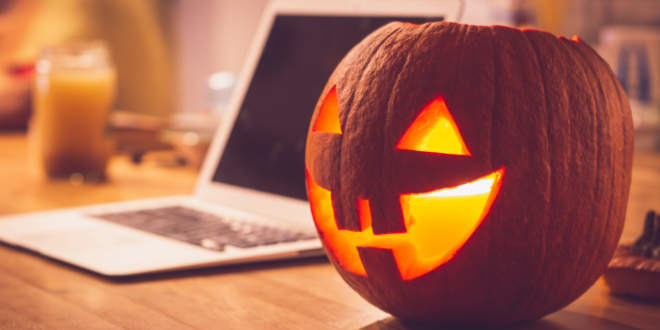
Consumer spending on Halloween is expected to reach $13.5 billion this year, according to the National Retail Federation’s annual consumer survey conducted by Prosper Insights & Analytics. The figure maintains the strong spending level of last year’s record $13.1 billion and reflects consumers’ continued enthusiasm for the holiday.
“Consumers continue to make Halloween a spending priority, but they are also approaching the season with affordability in mind,” says NRF vice president of industry and consumer insights Allison Zeller. “For more than two decades, NRF’s Halloween survey has tracked how consumers celebrate the holiday, and this year’s results show that shoppers are being thoughtful and strategic, looking for ways to maximize value throughout the season. Retailers understand these priorities and are offering a wide range of products across price points, making it easier for consumers to celebrate in ways that fit their budgets.”
About half of consumers (49%) say they plan to begin shopping for Halloween in September or earlier, on par with last year. The percentage of consumers shopping before October has grown over the past decade, rising from 34% in 2016 and highlighting how Halloween has stretched from a single-day event into a season for consumers. Enthusiasm for the season continues to drive much of this early activity, with 42% of these early shoppers saying they do so because they look forward to fall and 34% citing Halloween as one of their favorite holidays. Value also plays a role, with 23% of early shoppers saying they purchased items early to spread out their budgets, while 21% were motivated because prices and promotions were too good to pass up.
Halloween remains a popular holiday for consumers, with 74% planning to celebrate this year, on par with 73% last year. Participation in the holiday has held steady since its increased popularity during the pandemic and is notably higher than pre-pandemic levels, when only 68% of consumers planned to celebrate in 2019. Activities like handing out candy (61%), dressing in costume (50%), decorating their home or yard (42%), carving pumpkins (42%) and watching scary movies (42%) are the top ways consumers mark the occasion.
While consumers are expected to spend an average of $115.14 per person, in line with $114.45 per person in 2025, they remain mindful of costs and are taking a strategic approach to their Halloween purchases. As part of this, consumers are planning ahead. If they encounter higher-than-expected prices on Halloween items, nearly one-third (31%) say they will comparative shop, while 26% say they will look for coupons or sales. Another 34% plan to look for items they can reuse in future years or repurpose for other occasions or settings, as consumers focus on maximizing value.
Top shopping categories for the holiday remain largely consistent with last year. Candy remains the most popular purchase, with 96% of consumers planning to buy sweets, accounting for $4.1 billion in spending. Decorations follow at 78% and $4.3 billion, while 71% of shoppers are expected to spend $4.4 billion on costumes. Greeting cards are more popular this year, with planned purchases increasing to 42% from 38% in 2025, with spending expected to total $0.8 billion.
Discount stores (39%) continue to be the top destination for Halloween purchases, followed by specialty Halloween/costume stores (32%) and online (27%). Local and small businesses have also seen increased shopper interest, with 13% of consumers planning to make Halloween purchases at those stores, almost double 7% a decade ago in 2016.
Nearly half (47%) of consumers are using AI platforms and tools to support their Halloween shopping this year, with top use cases including brainstorming and coming up with ideas while planning (34%) or asking for recommendations or ideas during product research (32%).
“AI is becoming an increasingly common part of the consumer shopping journey,” Prosper executive vice president of strategy Phil Rist says. “As consumers prepare for Halloween, many are using these tools to brainstorm costumes and decorating themes, explore production options and find inspiration that help bring their celebrations to life.”
Online searches (32%) remain the leading source for Halloween costume inspiration, though the figure is down from 37% last year and marks its lowest level in a decade. Meanwhile, retail stores and costume shops are the second most popular inspiration source for costumes (26%) and the top inspiration for decorations (31%).