 Hardware Retailing The Industry's Source for Insights and Information



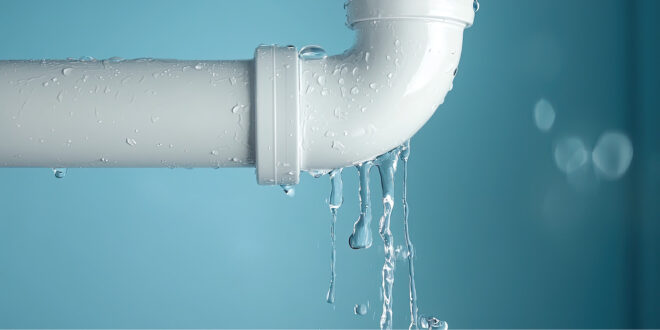
For independent hardware retailers, turning a modest plumbing section into a powerhouse category starts with meeting customers where their plumbing problems begin. According to a survey of 1,001 U.S. homeowners conducted by SupplyHouse, 93% of homeowners delay plumbing or HVAC repairs at least sometimes, while 13% of homeowners wait six months or longer to address their most recent issue and 8% don’t address it at all. The survey also found that 71% of homeowners facing plumbing issues tried a DIY fix before calling a pro, and 51% of those attempts either didn’t resolve the issue or made it worse. As a versatile category often involving emergencies, independent retailers have the opportunity to equip homeowners with not only the correct plumbing parts they need for a project, but with the knowledge and confidence to tackle plumbing issues themselves.
 At Knob Hardware & Tool Store in Connelly Springs, North Carolina, owner Sanu Silwal has built up a robust plumbing category in his store that is just a few years old. Founded in 2023, Knob Hardware offers a wide array of product departments and services, from hunting and fishing to U-Haul rentals and screen repair to plumbing and electrical. Silwal says the plumbing section brings in around 10% to 12% of total store revenue, serving as a small but mighty category for the operation. The goal of the Knob Hardware team is to ease customer concerns about plumbing issues they’re experiencing through offering knowledgeable service and a wide variety of products, including hard-to-find and specialty parts. Silwal says understanding the customer is the first step in providing expert recommendations for a plumbing project, with a focus on selling the problem before the product.
“We train our staff on the basic plumbing product categories, including product applications, sizing, fittings, connections and common repair situations,” he says. “Staff are encouraged to understand the customer’s project before recommending a product.”
While DIYers make up a significant portion of the store’s plumbing customers, contractors and professionals also frequent the operation. Silwal and his team understand that selling plumbing to each customer base requires slightly different techniques. He says DIY customers generally shop for a specific repair or home-improvement project and often need assistance identifying the correct size, connection type or replacement part. These customers also tend to compare products and prices more than professionals.
 A well-trained team is needed for both of these scenarios to help the DIYer talk through an issue and point the plumber to their best solution. While Knob Hardware doesn’t have a dedicated plumber on site, employees are trained to help customers in all areas of hardware, including plumbing.
“While we do not have a dedicated team exclusively selling plumbing, we do have our general sales staff assist customers across the plumbing department, with more experienced employees providing additional assistance for complicated plumbing questions or projects,” Silwal says.
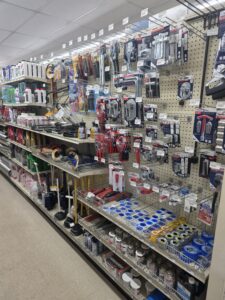
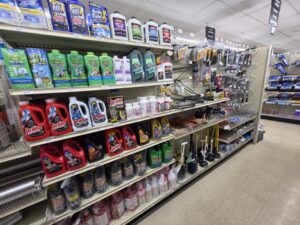
From faucets, sump and utility pumps and drain and waste products to fittings and valves, pipes and pipe fittings and supply lines and hoses, Knob Hardware has just about any plumbing item a contractor or homeowner could need. The store also stocks several specialty and niche products, including sewage pumps, water leak/monitoring products and specialty repair fittings and replacement parts. The department is organized by product type and customer need. Larger boxed products are primarily stocked on shelves, Silwal says, while smaller fittings, repair parts, connectors and accessories are displayed on peg hooks and in organized bins for easy selection. For busy contractors, it’s essential for shelves to be easy to find, well-labeled and stocked with product so they can get what they need and get back on the job site. For DIYers, stocked shelves and easy-to-navigate displays point homeowners to the best solution for their problem.
“Standard plumbing items are generally sold as high-volume, readily available products,” Silwal says. “Specialty products are sold more through application-based selling—staff determines what problem the customer is trying to solve and then help identify the appropriate product based on size, capacity, connection and intended use.”
Unclogging the Source
According to the SupplyHouse survey, minor plumbing leaks and clogged drains were the two plumbing issues homeowners put off the longest. Customers of different generations also addressed problems at different rates. Baby boomers acted the fastest, with 45% addressing their most recent issue immediately, compared with 34% of Gen X, 35% of millennials and 31% of Gen Z. Providing education in this category is a prime opportunity for independent retailers to win repeat sales and increase customer loyalty and satisfaction. See three ways to implement plumbing education in your stores to help customers find the confidence to fix their plumbing emergencies.
- Online Resources for Common Issues
Offering video demonstrations on how to fix basic plumbing snags like clogged drains, running toilets and dripping faucets is an easy way to provide education while boosting online engagement. - In-Store Demonstrations
Arm your employees with products and skills needed for in-store demonstrations to show customers how to fix issues in real time. - Create Emergency Repair Kits
Group items together in a bundle or on one shelf so customers can grab all the products they need for a specific job. You can even include QR codes near these items for customers to scan to watch your store’s plumbing video demonstrations.