 Hardware Retailing The Industry's Source for Insights and Information


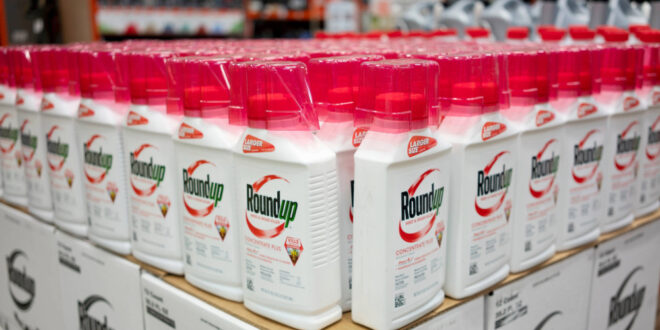
A Missouri state court has granted final approval to a $7.25 billion nationwide Roundup class settlement that includes legal protections for hardware retailers and other businesses that sold the herbicide.
The Nov. 20 ruling advances an agreement announced in February by Monsanto, a subsidiary of Bayer, to resolve current and future claims alleging that Roundup exposure caused non-Hodgkin lymphoma (NHL). The settlement includes provisions releasing retailers from covered claims, an important distinction for independent hardware store owners who have faced questions about their potential involvement in Roundup litigation.
Under the agreement, Monsanto will make declining annual payments totaling up to $7.25 billion over as many as 21 years, including payments already made. The settlement covers eligible individuals who allege Roundup exposure before Feb. 17, 2026, and have an NHL diagnosis or receive one within 16 years after the agreement becomes effective.
The agreement contains no admission of liability or wrongdoing by Monsanto.
“The Court’s final approval is a decisive milestone in the company’s strategy to mitigate the risks of both pending and future Roundup litigation,” says Bayer CEO Bill Anderson.
The ruling remains subject to appeal. Bayer says further settlement payments would be paused until any appeals are resolved.
What the Settlement Means for Hardware Retailers
The settlement agreement specifically identifies retailers and retail distributors of Roundup among its “Related Parties,” a category entitled to protection under its release provisions.
Under Section 3.1, participating class members agree to release Roundup-related claims against Monsanto and those related parties and not pursue covered lawsuits against them once the agreement becomes effective.
The agreement also addresses pending litigation. Participating claimants must stay covered lawsuits and dismiss those claims with prejudice before receiving settlement payments, subject to the agreement’s terms.
Court records show that hardware retailers, including independent hardware retailers and big box retailers, have previously been named as defendants in Roundup lawsuits. Claims against some retailers were subsequently discontinued, while other cases involved retailers alongside Monsanto. Being named in a lawsuit does not establish liability. The settlement’s release provisions provide additional protection against covered claims, rather than automatically resolving every lawsuit involving a retailer.
The protections are subject to the agreement becoming effective, its exclusions and other conditions. Individuals who validly opt out are not bound by the settlement’s releases.
Customer Notification Remains Voluntary
As Hardware Retailing reported in May, independent home improvement retailers received letters from the settlement administrator requesting assistance in notifying customers who might qualify for compensation.
The materials included posters in English and Spanish and requests that stores share settlement information through customer emails and other communications. Scott Reynolds, CEO of American Hardware & Lumber Insurance (AHLI), said retailers could decide whether to participate.
“Retailers are under no obligation to assist anyone in identifying their customers, unless ordered by a legal authority,” Reynolds said.
Reynolds also reported that Monsanto generally offered legal defense and indemnity in Roundup lawsuits involving dealers known to AHLI.
The November approval does not establish a new customer notification requirement or direct retailers to remove Roundup from their shelves. Retailers receiving legal notices or questions concerning potential liability should consult their insurance providers and legal counsel.
Supreme Court Ruling Narrows Claims
The settlement approval follows a June 25 U.S. Supreme Court decision in Monsanto Co. v. Durnell.
In a 7-2 ruling, the Court held that federal pesticide labeling law preempts the state-law failure-to-warn claim at issue because it would require Monsanto to add a cancer warning not required on the Environmental Protection Agency-approved Roundup label.
The decision restricts a major legal theory used against Monsanto, although it does not resolve every type of potential product-liability claim.
Bayer considers the Supreme Court decision and class settlement complementary parts of its strategy to reduce Roundup litigation.
For independent hardware store owners, the settlement’s express inclusion of retailers among protected parties is a significant development. However, those protections will not take full effect until the settlement becomes effective, following the resolution of any appeals, and will apply only to claims covered by the agreement.