 Hardware Retailing The Industry's Source for Insights and Information



By Darrell Baker
While many hardware retailers have been selling plants for a long time, some have just started recently and others have avoided the extra work and complexity of this category. Whatever the case for your operation, live goods can be a strong profit generator for your stores.
 Customers and employees thoroughly enjoy live plants—there’s something special about having color and vitality injected into a hardware operation that brings excitement and joy to many. However, that’s probably not at the forefront of the minds at the big-box stores when they invest in plant sales. For them, the category of “garden” rakes in about $20 billion in sales annually, which happens to be their single biggest department. Although they don’t publish a breakdown to show the exact amount of live goods that fit into the category with soils, grills and patio furniture, estimates show live goods make up half of the category’s sales. Regardless of the number, local independent retailers can compete with the box stores in assortment, selection and quality of product.
With some exceptions, most hardware stores can benefit from selling plants, but you’ll need to consider seasonality, space allocation, staffing needs and suppliers. Like other categories, local considerations must also be taken into account, as guidance for the northeast is going to be a bit different than the southwest. If you have a nursery or greenhouse operation within 100 yards of your store, selling plants may not be for you. But if you just have a grocery store or discount store with a few racks out front, you can probably win with live goods.
Supply Meets Demand
There are two approaches with regard to supply: consignment or standard purchase approach. If you’re just starting out, consignment may be a lower-risk approach. If you have a supplier in your area, like Bonnie Plants, you can set up with racking and locally focused, seasonally appropriate assortments that you only pay for when you sell them. You’re still responsible for keeping the plants healthy, but you have zero shrink. The limitations with this method is that typically you are restricted from selling any other plants and you’ll likely be restricted from picking your selection. A good local rep can lend their expertise to timing, assortment and pricing. It’s a little harder to differentiate yourself from the other stores that carry Bonnie, but running with a consignment model for a couple of seasons is a low risk way to test your market and see what kind of customer reaction you can cultivate.
 In contrast to consignment, you can also buy plants outright. Unlike nails, however, plants have a very short shelf life, providing you the opportunity to double your margin percentage, assuming you can mitigate shrink caused by plants dying before they sell. Typically, it’s ideal to have multiple suppliers. Many growers have particular strengths in a few categories. For instance, one might have great six-pack vegetables, annuals and hanging flowers, but do very little with perennials. You’d need at least a couple of vendors to fill the basics, and depending on your local circumstances, you may want to have several suppliers. Given minimum order and fixed delivery charges, consider a benchmark of about $25,000 in purchases per supplier per location to make it worth adding them.
Before buying from a grower or distributor, visit their location, meet their staff, review their goods and ask them lots of questions to help guide you to start out or expand your assortment. Ideally, these visits should take place the year before you want to jump in, but don’t delay a whole year because a visit didn’t work out.
Seasons of Sales
Plant sales are highly seasonal, so when starting out, begin with the lowest risk seasons and add more as you gain success. For instance, in many climates, pansies and violas are the first source of color, a hugely important concept in plants. If a plant isn’t in bloom when it’s at your store, it’s harder to sell. Most suppliers will email a weekly availability list that will indicate level of color. Try to land products just before they are in full bloom. Pansies are great to get the plant area set up, build excitement for customers and pave the way for what’s to come, but don’t go too heavy as the second wave of color comes fast and pansies don’t last long.
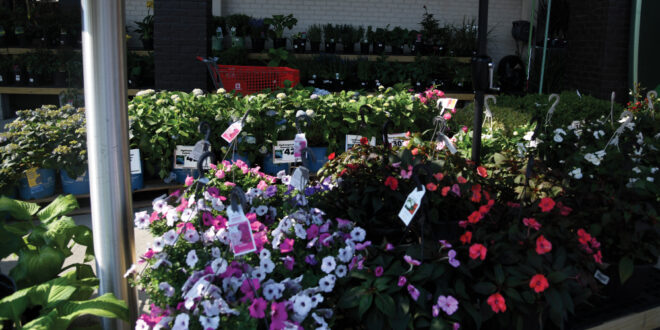
 One of the safer bets in plants is hanging flowers. Even the contractors coming through your lumber or paint departments will grab a $20-$30 hanging flower pot to bring home. Hanging baskets are relatively easy to display and maintain and a great way to increase your average ticket at the register. Plus, they make the store look great from the street if you can display them strategically. They will need to get soaked daily in most cases, so make sure you have a ready source of water available for all plant operations. Mother’s Day is a huge opportunity for hanging flowers.
The next category to bring in will be six-packs and smaller annuals and vegetables. Typically these sell in multiples, and they require a bit more attention as they can dry out quickly in hotter weather. Quart-size vegetables will sell for peppers and tomatoes, but the price tag needed will limit sales here.
Perennials can be a challenge at the beginning, but are a great category to build toward. These are particularly challenging to sell when they are not showing color, but a more sophisticated customer base, coupled with a knowledgeable salesperson in the garden area can make perennials a very successful category. Perennials may require a different supplier than your annuals and hanging basket distributor in your area. Look to gradually grow into perennial sales if you’re starting out, and once you establish assortment and quality, you’ll get repeat customers and grow your reach.
Nursery goods like bushes, trees and shrubs would be the last subcategory to add to the assortment in most cases as it’s a higher ticket and harder to differentiate. Research your market before jumping in; sometimes the local discount store will be selling arborvitaes cheaper than your distributor. One exception might be rose bushes. If you can find a good supplier with a brand like “knock out” roses, you could do well with a couple racks of them to try out. The good thing is they have a longer shelf life and are less likely to die on your watch.
The bulk of sales are likely to occur in spring, but fall can be an important season as well. Depending on your area, mums, pumpkins, gourds and corn stalks may sell, but watch out for low price sellers of these goods in your market as it may be tough to keep a good price perception in the fall categories. Christmas trees and trim are another opportunity if there’s a void in your market, but it’s a very short season and difficult to turn fast enough to keep profitable.
Live Operations
Beyond products, you’ll need to think about people. Staffing the plant area is critical. Sales are guaranteed to be significantly higher when you have a knowledgeable and personable associate tending to and selling plants. Most of the public is unsure of plants and may not know the difference between an annual and a perennial; having someone to help them succeed with plants is critical to increasing turns.
A great way to find a seasonal plant person is to look amongst your customers. Who do you see coming in that’s happy, personable, and would love short-term flexible hours? If you’re starting with 24-feet of Bonnie consignment, you probably don’t need to hire an extra person part time. But you absolutely need to have one or two staff who “own” the live plants area and understand how critical it is to keep the plants looking good and look for every opportunity to engage with customers about the plants.
In terms of operations, there are some unique things to keep in mind with live goods. First, there will be shrink due to dead plants, requiring constant attention. If you lose track of maintenance for a week or two (or even one really hot holiday weekend), you could end up with 20% shrink on the season. But with proper maintenance, you could keep it to 5%. Inspect your deliveries when they come off the truck, and if your customer won’t buy it, send it back with a note on the packing list. Most growers take pride in their product and want you to be successful, so if you treat them fairly and communicate with them, they will support you.
Think about pricing and signage; the simpler the better. Unless you’re doing consignment, I don’t recommend trying to keep inventory on every item. You’ll start the season at zero and zero out any quantities left in the system at the end. Group similar cost items together and price them as one. For instance, put all your 1 gallon perennial plants together but don’t name them “gallon” because many suppliers use pots slightly smaller—instead, call them “large perennial plants.” Depending on the size and traffic you grow to, use a “tally sheet” in the garden center that the customer can bring to the register. This way the plant experts can identify the correct SKUs and save the cashiers from trying to figure it out with a line at the register.
The final big win of plant sales is the market basket impact. You’ll find that plants drive non-plant sales like soils, pots and fertilizer, and plants are a great add-on to everything you sell. With a little luck, solid preparation and operational execution, you could grow your plant sales to one of your most important departments.