 Hardware Retailing The Industry's Source for Insights and Information



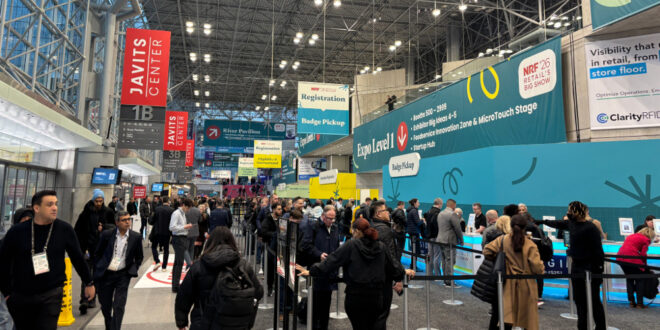
Exploring the future of retail with an eye on the current state of the industry, over 40,000 attendees converged on New York City for the National Retail Federation’s NRF 2026: Retail’s Big Show. Over three days, retailers, vendors, service providers, media and more took part in 185 sessions and explored the 335,000-square-foot show floor with over 1,000 vendors and service providers.
 Bob Eddy, chairman and CEO of BJ’s Wholesale Club, opened the event, reflecting on the fluctuations the industry experienced in a year marked by tariffs, policy uncertainty, strained supply chains and weakening consumer confidence.
“Despite all these challenges, retailers continued to move forward and Americans kept showing up for what mattered, the essentials, yes, but also the products and experiences that help families and communities celebrate milestones, enjoy holidays and honor traditions,” Eddy says. “It’s really hard to imagine those moments of joy without the help of retailers. Retail once again proved that we are more than just an industry. We are stabilizing force in people’s lives.”
Eddy shared that the retail industry will focus on several priorities in 2026 and beyond, including investing in its people, customer experience and technology that connects, not isolates.
“I encourage you to think about what’s next, not just about what’s new, because the next chapter of retail isn’t years away,” Eddy says. “It’s already unfolding, and we all get to shape it together.”
Here are four helpful insights from Retail’s Big Show that retailers in the independent home improvement channel should pay attention to in 2026 and beyond.
Customers Want Value
Today’s consumer is more cautious and looking for value. But value doesn’t always mean a lower price, says Ed Stack, executive chairman of DICK’S Sporting Goods, during a fireside chat with Eddy. Customers want products that improve their lives, make the day-to-day easier or bring joy and enjoyment.
“Our job as retailers is to be innovative, bring to the consumer what they’re looking for and see what’s next out there for retailers,” Stack says. “To be a really good retailer, you have to be able to look around corners. If you can’t look around corners, it’s going to be difficult.”
One way that DICK’S Sporting Goods is providing additional value is through the launch of its House of Sport concept. DICK’S House of Sport is an experiential, larger-format concept store, featuring interactive elements like climbing walls, golf simulators and turf fields. House of Sport aims to provide immersive experiences and community hubs, doubling the size of typical stores with dedicated areas to test gear.
“We wanted to design this whole ecosystem of the future. We knew it was going to be around community, service and product,” Stack says.”I told our team, ‘We need to build a concept that will kill DICK’S Sporting Goods.’ We need to build the concept that if somebody else built this store across the street from one of our traditional stores, it would run that store out of business, and that’s what we did. It’s been a great concept so far, and we’re excited for the future with it.”
Don’t Discount Gen Z
In The Youth Report by Pacsun, the company took a close look at the values, behaviors and trends shaping the next generation of consumers, and Pacsun CEO Brieane Olson shared some of the study’s highlights at Retail’s Big Show.
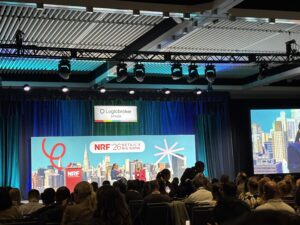 To gain Gen Z’s attention, retailers need to market to the generation’s positive confidence. Pacsun’s report found that 32% of Gen Z claim that they themselves have the biggest influence on how they think, feel or make decisions.
“Gen Z is stereotyped as being arrogant, but we see it more as a positive confidence,” Olson says. “They are storytellers and want to co-create alongside you. They don’t want to be dictated to, and so I think there’s a very different way that you have to market to them.”
Gen Z and Gen Alpha are both looking for customer experiences and bringing them into your store or shopping on your website means providing a community feel and meaningful touch points.
“Over the last three years, we have seen a return to the mall for both Gen Z and Gen Alpha,” Olson says. “They love experiential retail. They want to go to concerts and sporting events, and they’re interested in art. And so I think there’s a balance. They no longer see the traditional divide in terms of shopping online or shopping in store. They’re living in an ecosystem that is everywhere, all the time, always on, and they expect retailers to be able to show up in that way.”
Gen Z and Gen Alpha want to be part of the culture, the current zeitgeist, and because they are retail’s future consumers, it’s critical for retailers to reach them where they are.
“Go beyond social listening to connect with younger generations,” Olson says. “Actually give them a seat at the table and don’t be judgmental but hear out why they are different.”
Technology + Training = Effective Loss Prevention
Retail theft, fraud and crime continue to make headlines, with over half of retailers surveyed for NRF’s The Impact of Theft & Violence 2025 report citing increases in phone scams (70%), digital and e-commerce frauds (55%), shoplifting and merchandise theft (52%) and cargo or supply chain thefts (50%) being conducted by ORC groups over the past 12 months.
Technology combined with training is key to staying ahead of retail criminals, says Jonathan Novack, loss prevention manager for H&M.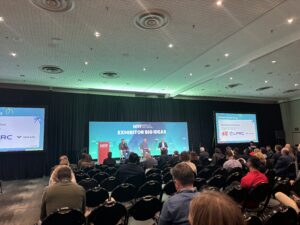
“We need to train our people how to react appropriately and what steps to take,” Novack says. “Obviously, we don’t want them to get hurt, but there are things they can do by stepping out of the way and just observing.”
Case management is another crucial part of protecting your employees and operation. At H&M, every incident is entered into a case management program. Everyone on the loss prevention team can see those entries and they are easily shared with law enforcement as well.
“So it’s not only us fighting battle,” Novack says. “Case management helps us identify these bad actors that come to the stores and build a case against repeat offenders. If somebody’s coming to one of my stores and done something wrong, I’m sure they have somewhere else too.”
Lean Into Connections
Looking beyond 2026, Cassandra Napoli, consumer forecaster for WGSN, provided insights into what retail will look like in 2028 and how retailers can plan now to meet customers where they are two years from now. She presented six major themes for retail change in 2028, covering everything from AI to climate change.
Even though AI is becoming more commonplace in retail, many consumers are still wary of it, so moving forward, retailers will want to look at AI as a way to augment and not replace, Napoli says.
“Make apply, not rely your mantra for AI use,” she says. “As AI moves from changemaker to everyday infrastructure, the real intelligence will lie in using it to enhance distinctly human strengths and experiences, rather than replace them.”
Customers are hungry for experience and want to connect via the senses. According to a 2025 consumer study by The Harris Poll and Quad, 86% of U.S. Gen Z and Millennials say touching and feeling products is a purchase driver.
 “In a world that’s incredibly wired, the biggest disruptors could be the things that connect us back to making us human,” Napoli says. “Consumers want to touch products: they want to feel, they want to have their senses delighted when they walk into a retail shop.”
The world has been and will continue to be in chaos. We are experiencing a polycrisis era, with multiple critical events (pandemics, wars, civil unrest, etc.) happening at once. Even though these events often lie outside the world of retail, retailers can play a major role in helping their customers navigate these challenges by providing third spaces, those spaces outside of home and work where consumers can connect and build community. Consumers will be looking for credibility and trustworthiness.
“When trust is collapsing across the board, growth will require proof, not promises,” Napoli says. “It’s time to invest in hard facts and consistent results rather than slick marketing. Businesses must guide people past the noise and toward things that provide meaning, belonging, respite and release.”